Do Anti-Snoring Mouthpieces Work?
Do anti-snoring mouthpieces work? Yes — the 2015 sleep guideline recommends oral appliances for primary snoring, based on 51 studies. Custom, dentist-made devices that advance the jaw work better than boil-and-bite versions, and they need a dentist's oversight because they can shift teeth and strain the jaw. They are not for everyone — and not without a sleep study first.
Applies to: people considering a mouthpiece for snoring, and anyone asking do anti-snoring mouthpieces work before buying one online or seeing a dentist.
⚠ Get a sleep study before buying a mouthpiece
A mouthpiece can quiet snoring while hiding sleep apnea. If your partner reports breathing pauses or gasping, or you wake with headaches and crushing daytime sleepiness, get tested first — a mouthpiece is not a substitute for a diagnosis, and treating snoring without knowing whether apnea is underneath is the one real risk on this page.
This page explains published research. It doesn't diagnose or treat anything. Talk to a qualified clinician — and a dentist experienced in sleep appliances — about persistent snoring, especially snoring with pauses or daytime sleepiness.
A mouthpiece for snoring is a device you wear in your mouth at night. Most work by holding your lower jaw slightly forward, which pulls the tongue forward with it and opens the airway behind it. A smaller group holds the tongue forward directly. Both types have been tested, both have a guideline behind them, and both have real downsides the marketing rarely mentions. This page gives you the guideline's recommendation, the difference between the two types, the difference between custom and boil-and-bite, and the side effects that decide whether a mouthpiece is right for you.
What the evidence says
The strongest evidence on do anti-snoring mouthpieces work is not a single trial. It is a clinical practice guideline from the American Academy of Sleep Medicine and the American Academy of Dental Sleep Medicine, published in 2015 and based on 51 articles (Ramar et al., 2015, Journal of Clinical Sleep Medicine 11(7):773–827). For primary snoring — snoring without apnea — the recommendation is a STANDARD, its highest grade: oral appliances are recommended for primary snoring in adults. For sleep apnea, the guideline recommends oral appliances for patients who cannot tolerate CPAP, or who prefer an appliance.
The guideline makes three further points. First, custom, titratable appliances — made by a dentist and adjustable in small steps — are recommended over non-custom, boil-and-bite devices, as a GUIDELINE-grade recommendation. Second, appliances should be delivered with dentist oversight, because they can cause dental and bite changes that need monitoring. Third, follow-up sleep testing is recommended after fitting — because a mouthpiece that quiets the noise without fixing the breathing underneath is worse than no mouthpiece at all.
On the comparison between the two device types, jaw-advancing devices — mandibular advancement devices, or MADs — are the better-studied type and the one the guideline's evidence base is built on. Tongue-retaining devices, or TRDs, hold the tongue forward instead of moving the jaw, and are the option for people who cannot use a jaw-advancing device — but no head-to-head comparison of the two types was verified for this page, so this page does not rank them by efficacy. A 2026 review found MADs are associated with dental and bite changes, jaw-muscle effects, and craniofacial alterations with long-term use, while dry mouth and excess saliva are usually transient — and most adverse effects appear mild, progressive, and clinically manageable with proper selection, gradual titration, and regular follow-up.
| Question | What the evidence says | Source |
|---|---|---|
| Do mouthpieces work for snoring? | Yes — recommended for primary snoring (STANDARD grade) | Ramar et al., 2015 — 51 articles |
| Custom vs boil-and-bite? | Custom, titratable recommended over non-custom (GUIDELINE grade) | Ramar et al., 2015 |
| MAD vs tongue-retaining device? | No head-to-head comparison verified; MADs are the better-studied type and the guideline's default | Schmolck et al., 2026; Ramar et al., 2015 |
| Do they work as well as CPAP? | No significant difference in average breathing-pause reduction across severities — but CPAP is still first-line for severe apnea | Ramar et al., 2015 |
| What are the risks? | Dental and bite changes, jaw-muscle effects, craniofacial alterations long-term; dry mouth and excess saliva usually transient | 2026 review of MAD side effects |
| Who should not buy one online? | Anyone with TMJ pain, dentures, missing teeth, or gum disease — and anyone who has not had a sleep study | Ramar et al., 2015 — dentist oversight |
The verdict: mouthpieces work for snoring, with a guideline behind them — and the guideline's version of "work" comes with a dentist, a custom fit, an adjustable device, and a follow-up sleep test. A boil-and-bite device bought online is not that intervention.
The evidence in detail
The guideline: Ramar et al., 2015
Ramar and colleagues wrote the clinical practice guideline for oral appliance therapy for sleep-disordered breathing, published jointly by the American Academy of Sleep Medicine and the American Academy of Dental Sleep Medicine (Ramar et al., 2015). The task force reviewed 51 articles and graded each recommendation. For primary snoring in adults, the recommendation is a STANDARD — the highest grade the guideline uses. For sleep apnea, the guideline recommends oral appliances for patients intolerant of CPAP or who prefer an appliance; for severe apnea, CPAP remains first-line, and an appliance is an alternative when CPAP cannot be used.
Two comparisons matter for buyers. First, custom-made titratable appliances are recommended over non-custom appliances — because a device adjustable in small steps can be titrated to the smallest advancement that works, which limits side effects. Second, the guideline found no significant difference between oral appliances and CPAP in the average reduction of the breathing-pause index across apnea severities — which is not the same as saying they are equal. CPAP reduces the index further in severe disease, and the guideline still puts CPAP first for severe apnea. The appliance's advantage is tolerability: an unused CPAP machine treats nothing.
The guideline also sets the process: a dentist trained in sleep appliances should deliver the device, monitor dental and bite changes, and arrange follow-up sleep testing to confirm it is working. That process is part of the recommendation, not an optional extra — and a device bought online, fitted by boiling it in water, and never checked against a sleep study is outside the evidence the guideline reviewed.
The side effects: 2026 review
A 2026 review of mandibular advancement device side effects, published in Current Oral Health Reports, gathered the long-term evidence on what these devices do to the mouth and jaw (Schmolck et al., 2026, DOI 10.1007/s40496-026-00422-0). MADs are associated with dental and occlusal changes, including tooth movement and bite changes; with temporomandibular joint and muscular effects; and with craniofacial alterations over long-term use. Dry mouth and hypersalivation are common early on but are usually transient. A meta-analysis of 21 studies cited in the review found overjet decreased by 0.99 mm and overbite by 1.0 mm on average, from increased inclination of the lower front teeth by 2.07 degrees. Most adverse effects appear mild, progressive, and clinically manageable when patient selection, gradual titration, and regular follow-up are done properly — which is the review's own summary, and the reason the dentist's role matters.
Two things the review does not do matter as much as what it does. It does not give a single percentage for how often each side effect occurs, because the studies measured them differently — so this page does not give one either. And it does not compare MADs against tongue-retaining devices head to head, so this page does not rank the two types. The honest summary: the better-studied device carries measurable long-term dental changes, the alternative is less studied, and both need a dentist watching.
How the two types work
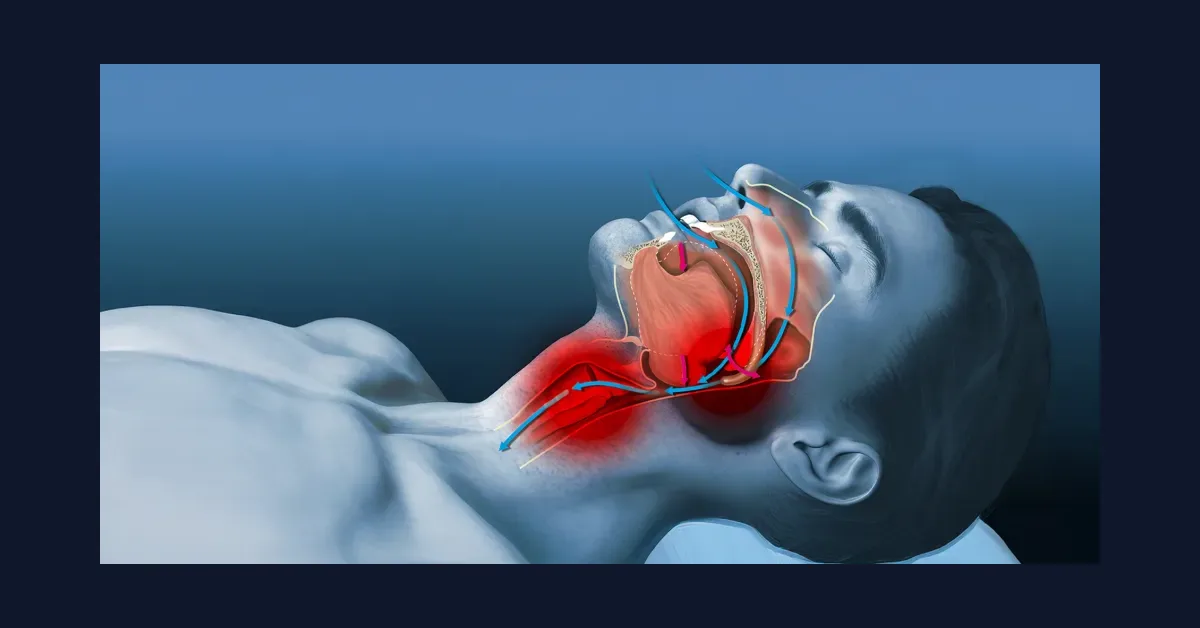
A mandibular advancement device holds the lower jaw forward by a few millimetres while you sleep. Advancing the jaw pulls the tongue forward with it, which opens the airway behind the tongue and stiffens the soft tissues so they vibrate less. The advancement is adjustable on custom devices — the dentist moves it forward in small steps until the snoring stops or the side effects start, then backs off a step. A tongue-retaining device holds the tongue forward with gentle suction, without moving the jaw. Neither type is a cure for apnea; both are treatments that need checking.
The hopeful reading
"A mouthpiece from the internet is the same as the one the guideline recommends."
The full evidence
The guideline recommends custom, titratable appliances delivered with dentist oversight and follow-up sleep testing (Ramar et al., 2015). A boil-and-bite device bought online is not that intervention — and the guideline explicitly recommends custom over non-custom.
Choosing a mouthpiece
The choice is not really between brands. It is between two routes — the guideline's route and the online route — and the evidence only supports one of them.
- Get a sleep study first. A mouthpiece can quiet snoring while hiding sleep apnea, and the guideline's recommendations assume the diagnosis is known. If you have not been tested, the test comes before the device — not after. See how sleep apnea is tested.
- See a dentist experienced in sleep appliances. The guideline requires dentist oversight because the device changes your bite and your teeth. Ask how many appliances they fit and how they monitor bite changes.
- Choose custom and titratable over boil-and-bite. The guideline recommends custom, titratable appliances over non-custom ones as a GUIDELINE-grade recommendation (Ramar et al., 2015). A custom device fits your teeth, and a titratable one can be adjusted in small steps to the smallest advancement that works — which limits side effects.
- Expect an adjustment period, and say so if it hurts. Soreness, excess saliva, and dry mouth are common early on and usually transient (Schmolck et al., 2026). Pain that persists, or a bite that feels wrong in the morning, is a reason to go back to the dentist — not to push through it.
- Get a follow-up sleep test. The guideline recommends follow-up testing after fitting, to check that the appliance is actually working. A mouthpiece that quiets the noise without fixing the breathing underneath hides the problem.
- Go back for regular check-ups. The dental changes the review describes — overjet down 0.99 mm, overbite down 1.0 mm on average in a meta-analysis of 21 studies — accumulate over years (Schmolck et al., 2026). Regular dental follow-up catches them early, while they are still manageable.
- If you have TMJ pain, dentures, or missing teeth, ask first — don't buy first. A jaw-advancing device loads the jaw joint and anchors to teeth. People with jaw-joint pain, with dentures, or with too few teeth to anchor a device need a dentist's assessment before any purchase, because the device may not fit, may hurt, or may make the joint worse. A tongue-retaining device is the alternative for some of these people — but that is a dentist's call, not an online quiz's.
Custom vs boil-and-bite: what the difference actually is
A custom device is made from impressions of your teeth, fits precisely, and is adjustable in small steps — the dentist advances the jaw a fraction at a time until the snoring stops. A boil-and-bite device is softened in hot water and bitten into shape at home; it fits approximately, is usually not finely adjustable, and is not monitored. The guideline's preference for custom over non-custom is not about luxury — it is about titration and monitoring, the two things that make the device work at the smallest effective advancement and catch side effects early. No verified source gives a reliable price range for either type, so this page does not quote one.
How long does a mouthpiece last, and how long does it take to get used to?
No verified source gives a reliable lifespan or adaptation timeline for snoring mouthpieces, so this page does not quote one. What the evidence does say is that the dental changes are progressive over years — the device is a long-term commitment with long-term monitoring, not a one-off purchase. Soreness and excess saliva are common early and usually transient, and the adjustment is measured in weeks, not nights. If a product page quotes a lifespan in months or an adaptation time in days, ask for its source. There isn't a verified one.
Mistakes and myths
Myth 1: Any mouthpiece is as good as any other
The guideline recommends custom, titratable appliances over non-custom ones (Ramar et al., 2015). A boil-and-bite device is not the intervention the guideline reviewed, and the difference is not cosmetic — it is titration and monitoring, the two things that make the device work at the smallest effective advancement and catch side effects early.
Myth 2: A mouthpiece is a one-off purchase
The dental changes the 2026 review describes are progressive — they accumulate over years of nightly use (Schmolck et al., 2026). A mouthpiece is a long-term commitment with regular dental follow-up, not a product you buy once and forget.
Myth 3: Jaw pain is just part of getting used to it
Soreness early on is common and usually transient. Pain that persists, a bite that feels wrong in the morning, or jaw clicking that wasn't there before are reasons to go back to the dentist — not to push through. The review lists temporomandibular joint and muscular effects among the long-term risks, and the guideline's requirement for dentist oversight exists precisely because these effects need monitoring.
Myth 4: A quieter night means it's working
Quieter is not the same as treated. The guideline recommends follow-up sleep testing after fitting, because only a sleep study can confirm the breathing pauses actually fell. A mouthpiece that quiets the noise without fixing the breathing underneath hides the problem — and the follow-up test is the step that catches it.
Myth 5: A mouthpiece replaces CPAP for sleep apnea
For severe apnea, CPAP remains first-line, and the guideline recommends oral appliances for apnea patients who cannot tolerate CPAP or who prefer an appliance (Ramar et al., 2015). The guideline found no significant difference in the average breathing-pause reduction between appliances and CPAP across severities — but CPAP reduces the index further in severe disease. An appliance is an alternative, not a replacement.
What the evidence cannot tell you
- The guideline is from 2015. It is still the current joint guideline from the two academies, and nothing has superseded it — but a decade of devices has been sold since it was written, and the guideline does not cover them.
- No head-to-head MAD vs TRD comparison was verified. The 2026 review focuses on MADs and does not compare the two types directly. This page does not rank them by efficacy or tolerability, and any source that does should be asked for its trial.
- No verified lifespan, adaptation time, or price. How long a mouthpiece lasts, how long it takes to get used to, and what it costs are the three questions buyers ask most — and none of them has a verified source. This page does not quote numbers it cannot verify.
- The side-effect numbers are averages, not your risk. Overjet down 0.99 mm and overbite down 1.0 mm are meta-analysis averages across 21 studies. Your own change depends on your bite, your advancement, and how long you wear the device — which is why the dentist monitors it rather than this page predicting it.
- The guideline's evidence is mostly about apnea, not snoring alone. The STANDARD recommendation for primary snoring is the guideline's highest grade, but most of the 51 articles studied apnea. The snoring-specific evidence is thinner than the apnea evidence, and the recommendation for snoring rests on fewer studies than the recommendation for apnea.
- No trial has tested a mouthpiece specifically in women, or in people with TMJ. The TMJ question — the most common reason people hesitate — has no trial answer. The review lists jaw-joint effects as a long-term risk, and the guideline requires dentist oversight, but whether a mouthpiece helps or harms a painful jaw is a dentist's assessment, not a finding.
What would settle it: an updated guideline covering the devices sold since 2015, and a head-to-head trial of MADs against TRDs with compliance and side effects as pre-specified outcomes. Until then, the honest grade is "strong guideline for the approach, thin evidence for the details buyers actually ask about."
When snoring needs checking
Most snoring is a noise problem. Some snoring is the audible sign of sleep apnea, and the difference matters because apnea raises the risk of high blood pressure, heart disease, stroke, and daytime accidents. A mouthpiece is for snoring and for mild-to-moderate apnea in people who cannot use CPAP — not a way to skip the diagnosis.
⚠ Red flags — seek care promptly
- Breathing pauses during sleep noticed by a partner, or gasping or choking that wakes you.
- Daytime sleepiness that interferes with driving, work, or conversation, or morning headaches and waking unrefreshed.
- Snoring that started suddenly in an adult who never snored before, especially with new sleepiness.
- New snoring in pregnancy — mention it to your midwife or doctor; it was linked in one study to higher rates of pregnancy-induced hypertension and preeclampsia (Franklin et al., 2000).
- High blood pressure that is hard to control, or a new diagnosis of atrial fibrillation.
What a clinician will do, briefly: a sleep history and an examination, then a sleep study — at home or in a lab — if apnea is suspected. The study measures breathing pauses directly, which is the test no mouthpiece can replace. For the fuller map of snoring versus apnea, see snoring or sleep apnea: how to tell the difference, and for the natural plan, how to stop snoring naturally.
Key takeaways
- Yes — the 2015 sleep guideline recommends oral appliances for primary snoring at its highest grade, based on 51 studies (Ramar et al., 2015).
- Custom, titratable devices are recommended over boil-and-bite, with dentist oversight and a follow-up sleep test — the process is part of the recommendation.
- MADs are the better-studied type; tongue-retaining devices are the alternative for people who cannot use a jaw-advancing device. No head-to-head comparison was verified.
- Long-term risks are real and measurable: overjet down 0.99 mm and overbite down 1.0 mm on average in a meta-analysis of 21 studies, plus jaw-muscle and craniofacial effects (Schmolck et al., 2026).
- Get a sleep study before buying, see a dentist experienced in sleep appliances, and go back for regular check-ups. A mouthpiece bought online without those steps is not the intervention the guideline recommended.
Questions people actually ask
Do anti-snoring mouthpieces work?
Yes. The 2015 American Academy of Sleep Medicine guideline recommends oral appliances for primary snoring at its highest grade, based on 51 studies (Ramar et al., 2015). Custom, titratable devices work better than boil-and-bite, and they need a dentist's oversight and a follow-up sleep test.
Can a mouthpiece help if I have TMJ?
That is a dentist's assessment, not a question this page can answer — no trial has tested mouthpieces in people with TMJ. A jaw-advancing device loads the jaw joint, and the 2026 review lists jaw-joint and muscular effects among the long-term risks (Schmolck et al., 2026). If you have TMJ pain, see a sleep-appliance dentist before buying anything.
Can I use a mouthpiece if I have dentures?
Probably not a jaw-advancing device — MADs anchor to teeth, and dentures do not give them a stable anchor. A tongue-retaining device, which holds the tongue forward without moving the jaw, is the alternative some dentists consider. Either way, this is a dentist's assessment: do not buy a boil-and-bite device and hope it fits dentures.
Custom vs boil-and-bite mouthpiece — which works?
Custom, titratable devices. The 2015 guideline recommends them over non-custom devices, because a custom device fits precisely and can be adjusted in small steps to the smallest advancement that works (Ramar et al., 2015). A boil-and-bite device fits approximately, is usually not finely adjustable, and is not monitored. No verified source gives a reliable price range, so this page does not quote one.
How long does a snoring mouthpiece last?
No verified source gives a reliable lifespan, so this page does not quote one. What the evidence does say is that the dental changes are progressive over years of nightly use (Schmolck et al., 2026) — which means a mouthpiece is a long-term commitment with regular dental follow-up, not a one-off purchase. If a product page quotes a lifespan, ask for its source.
How long does it take to get used to a mouthpiece?
No verified source gives a reliable adaptation timeline. Soreness, excess saliva, and dry mouth are common early on and usually transient, according to the 2026 review (Schmolck et al., 2026), and the adjustment is measured in weeks, not nights. Pain that persists, or a bite that feels wrong in the morning, is a reason to go back to the dentist.
MAD vs tongue-retaining device — which is better?
MADs are the better-studied type and the one the guideline's evidence base is built on. Tongue-retaining devices hold the tongue forward without moving the jaw and are the option for people who cannot use a jaw-advancing device. No head-to-head comparison of the two types was verified for this page, so this page does not rank them by efficacy — that is a dentist's call for your mouth.
Should I get a sleep study before using a mouthpiece?
Yes. A mouthpiece can quiet snoring while hiding sleep apnea, and the guideline's recommendations assume the diagnosis is known (Ramar et al., 2015). The guideline also recommends follow-up sleep testing after fitting, to check the appliance is actually working. Get tested first: a mouthpiece is no substitute for a diagnosis.
Last updated: 2026-11-21
Updated 21 November 2026 — new page: do anti-snoring mouthpieces work, built from the Ramar et al. 2015 oral-appliance guideline and the Schmolck et al. 2026 side-effects review.
Not medical advice: the content on this site is for education only and isn't medical advice. Nothing here diagnoses or treats any condition. Talk to a qualified clinician — and a dentist experienced in sleep appliances — about any health concern, especially breathing pauses, gasping, or daytime sleepiness.
References
- Ramar, K., et al. (2015). Clinical practice guideline for the treatment of obstructive sleep apnea and snoring with oral appliance therapy: an update for 2015 (51 articles; oral appliances recommended for primary snoring, STANDARD grade; custom titratable over non-custom, GUIDELINE grade). Journal of Clinical Sleep Medicine, 11(7), 773–827. PMC4481062 · PubMed 26094920
- Schmolck, J., Kohout, K., Kaldas, M., et al. (2026). Mandibular advancement devices for obstructive sleep apnea therapy in dentistry: advantages and pitfalls (MADs associated with dental and occlusal changes, TMJ and muscular effects, and craniofacial alterations long-term; overjet −0.99 mm, overbite −1.0 mm in a meta-analysis of 21 studies). Current Oral Health Reports, 13, 2. DOI 10.1007/s40496-026-00422-0
- Franklin, K. A., et al. (2000). Snoring, pregnancy-induced hypertension, and growth retardation of the fetus (n=502; 23% habitual snoring in the last week of pregnancy). Chest, 117(1), 137–141. PubMed 10631211
How we researched this page
We answered 8 reader questions on this page, drawn from collected "people also ask" queries on do anti-snoring mouthpieces work, and traced every claim to 3 evidence sources: the Ramar et al. (2015) oral-appliance guideline, the Schmolck et al. (2026) side-effects review, and the Franklin (2000) pregnancy study for the safety section. Every number on the page was checked against its cited source before publication; claims that could not be verified against a primary source were removed — including the claim that tongue-retaining devices have comparable efficacy but lower compliance than MADs, which was not supported by the review we checked, and any lifespan, adaptation-time, or price figure for mouthpieces, for which no verified source exists. No manufacturer claims were used as evidence. Limits and counter-evidence were published alongside every positive finding. Full method: how we research.
Editorial notice: this page links to our snoring guides, which are educational articles — not product pages. We may receive compensation if you later buy through links on some of our pages, at no extra cost to you; it never affects our scores or recommendations. Editorial policy